Tuesday, 19 October 2010

The Fish Quay and old High Light, North Shields


In the foreground can be seen the Fish Quay at North Shields on the River Tyne. The tall white building is called the old High Light, once a navigational aid to ships entering the river it is now a residential house.

Monday, 18 October 2010

Conversation Piece


Conversation Piece by the late Spanish sculptor Juan Munoz is located near Littlehaven in South Shields at the mouth of the River Tyne. The sculpture consists of 22 bronze figures which were installed in 1999 as part of an Art on the Riverside programme.

Saturday, 16 October 2010

Arbeia


Arbeia was the Roman fort founded around 120 AD near the mouth of the River Tyne in what is now South Shields. Standing high over the river it became  the maritime supply fort for Hadrian's Wall.  It was occupied until the Romans left Britain in the 5th century. One theory about its name  is "fort of the Arab troops", referring to the fact that part of its garrison at one time was a squadron of Syrian boatmen from the Tigris. The photo above shows a reconstruction of the fort's West Gate.

Friday, 15 October 2010

Tuesday, 12 October 2010

hawser


a metal hawser, probably from a fishing trawler,  washed up on the beach north of Amble in Northumberland

Monday, 11 October 2010

a trace


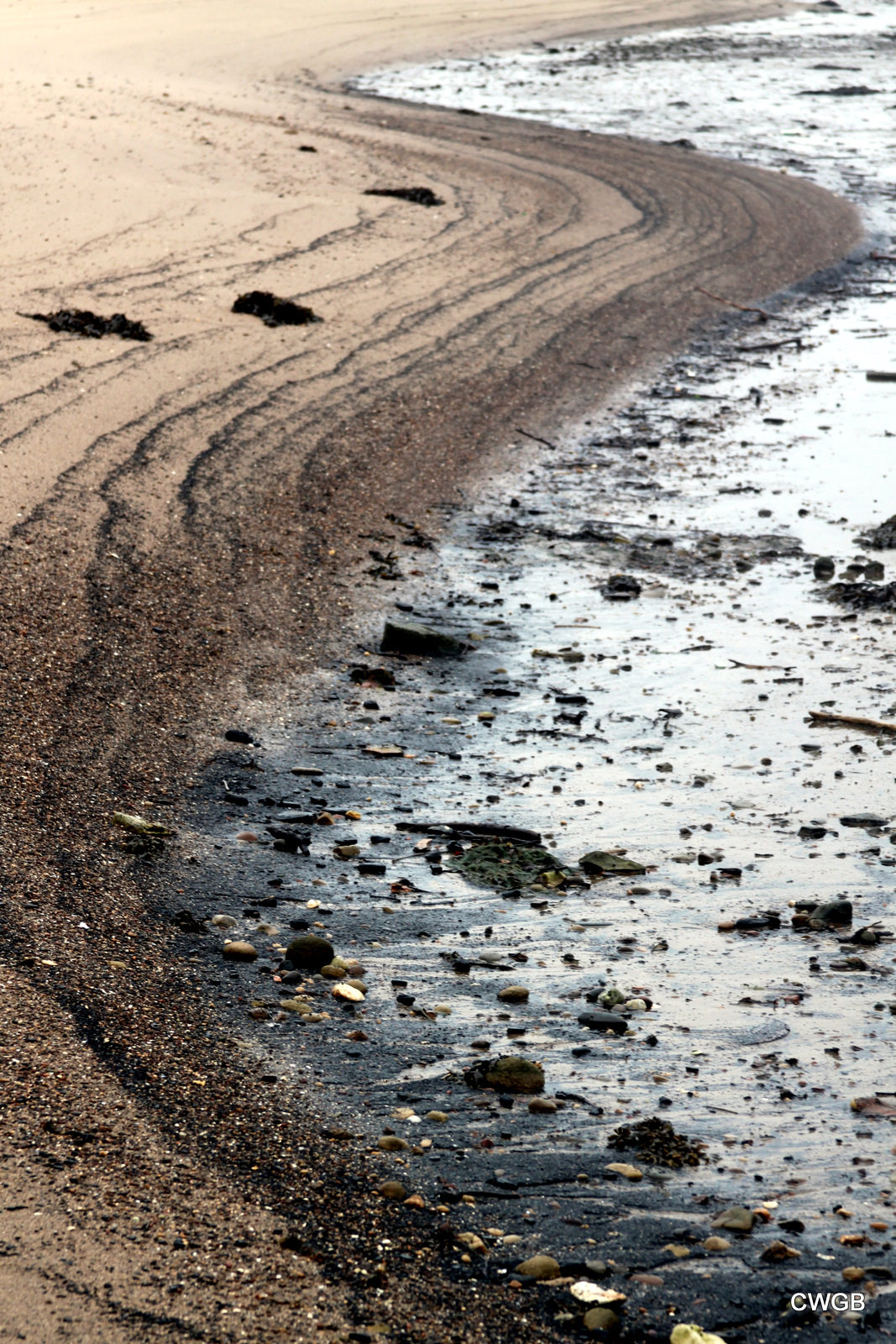
the receding waters leave  tide marks of coal dust at the mouth of the river Coquet at the once thriving coal exporting port of Amble in Northumberland

Sunday, 10 October 2010

Amble Harbour


Amble lies at the mouth of the river Coquet on the Northumberland coast, it once served as a  port for coal exports from the once thriving mining industry in Northumberland. The port  now has a thriving marina for leisure yachts but also still supports a small fishing fleet,  of which the Nimrod, can be seen here.

Saturday, 9 October 2010

time and tide


This is a Second World War beach defence near Warkworth in Northumberland. It once would have nestled, disguised, amongst sand dunes which, due to coastal erosion, have retreated some 20 metres over the last 70 years, a process that will continue because of rising sea levels.

Friday, 8 October 2010

Yum Yum


a take-away called Yum Yum in Edinburgh, and not a deep fried Mars Bar in sight

Friday, 1 October 2010

roadside shrine


it is increasingly common to see these at roadsides where a fatality has occurred, some, like this one, are in place for years before the local authorities clear them away

Wednesday, 29 September 2010

Mr Speaker at Northumbria University

John Bercow  the Speaker of the House of Commons was at Northumbria University this evening to give a lecture entitled Parliament Beyond Westminster, at which he
 outlined his plans to reunite Parliament with the public  and to modernise, revive and reform the chamber. During the course of the evening I   asked  him whether he followed his wife Sally's ' tweets'; he said he did not, but vigorously defended her democratic right to do so. Good for him.

Tuesday, 28 September 2010

Monday, 27 September 2010

St Andrew's Church , Bolam


This picture shows a  window commemorating an incident on 1st May 1942 when a bomb from a German bomber punched a hole  through the wall of St Andrew's Church  in Bolam, Northumberland, but failed to explode; see here for further details of the air raid.
The Church dates back to Saxon times.  The tower is of the late Saxon period whilst the  interior is largely Norman  1180-1200.

Wednesday, 22 September 2010

Cycle Hire


The London Cycle Hire scheme, sponsored by Barclays Bank,  was set up this summer and 6,000 bicycles are  available for rental. It will eventually include 6,000 bikes and 400 docking stations such as those seen here near Trafalgar Square.

Tuesday, 21 September 2010

Beach defences South of Alnmouth


World War 2 coastal defences near Alnmouth, Northumberland. These cubic blocks were made of concrete and were intended to obstruct any German  enemy tanks that might land on the beach. Some 70 years later they have proved remarkably resilient, susceptible mainly to the shifting sands upon which they were built. These cubes generally came in two sizes, either 5 feet (1.5 m) or 3.5 feet (1.1 m).